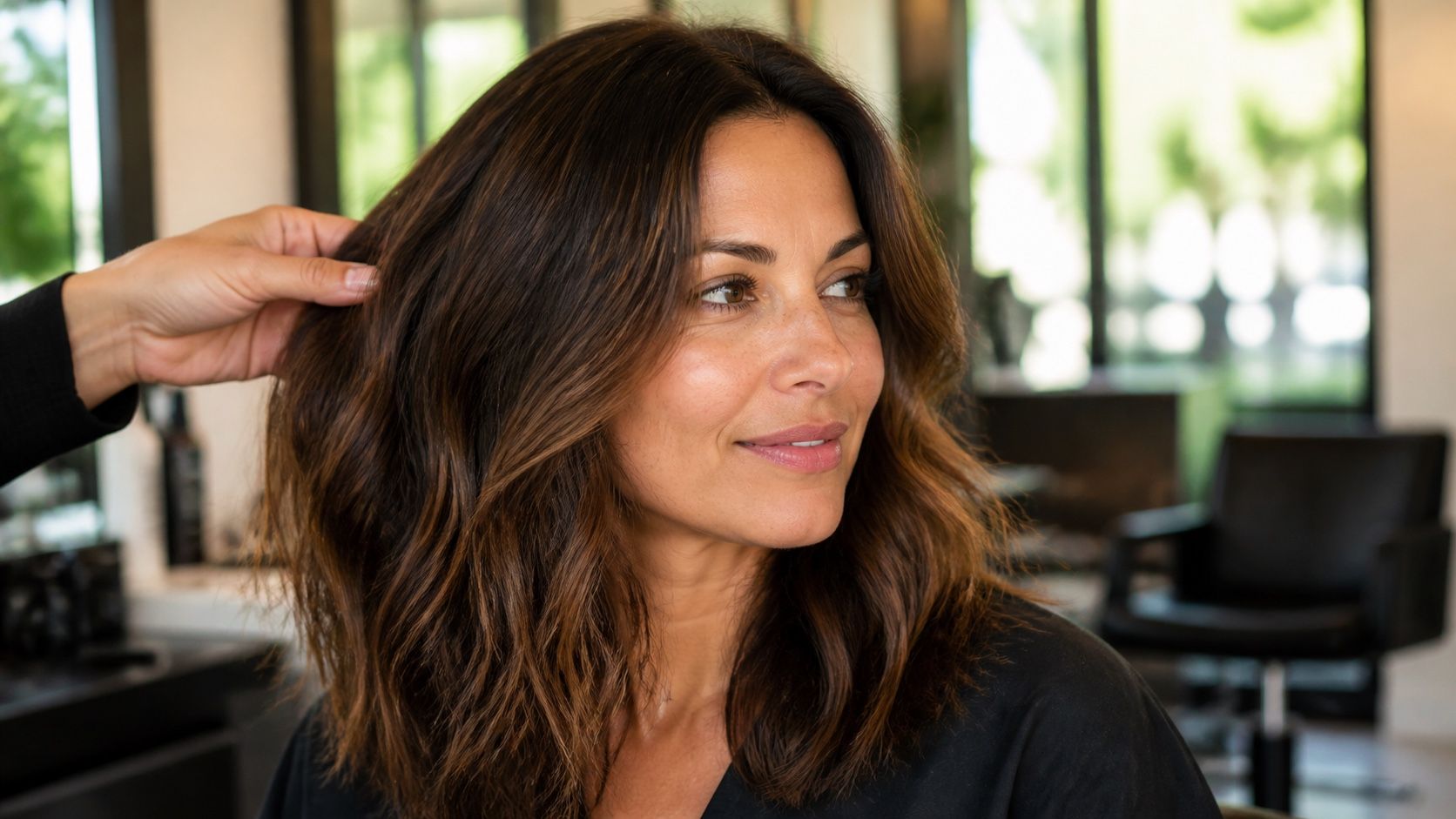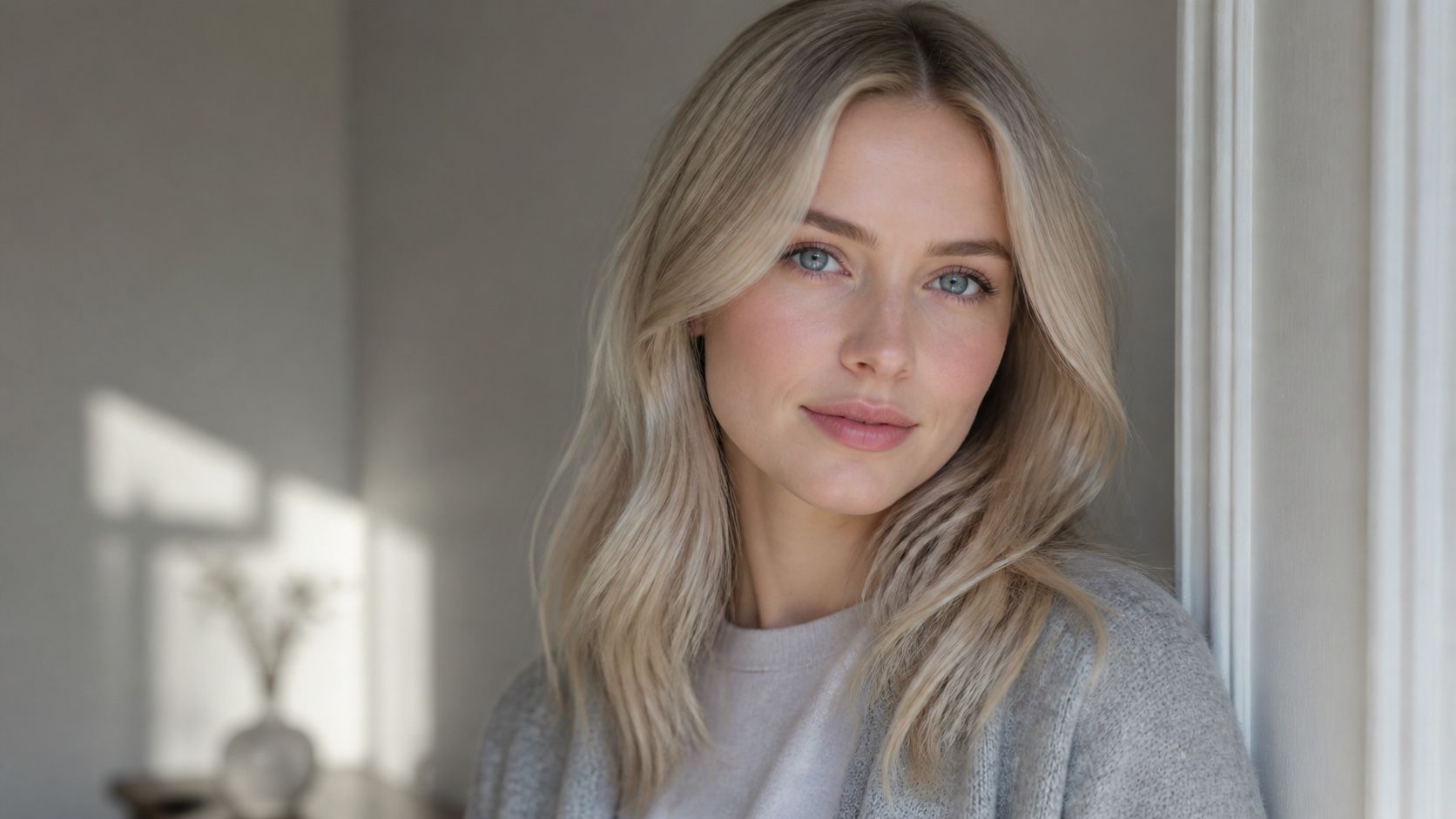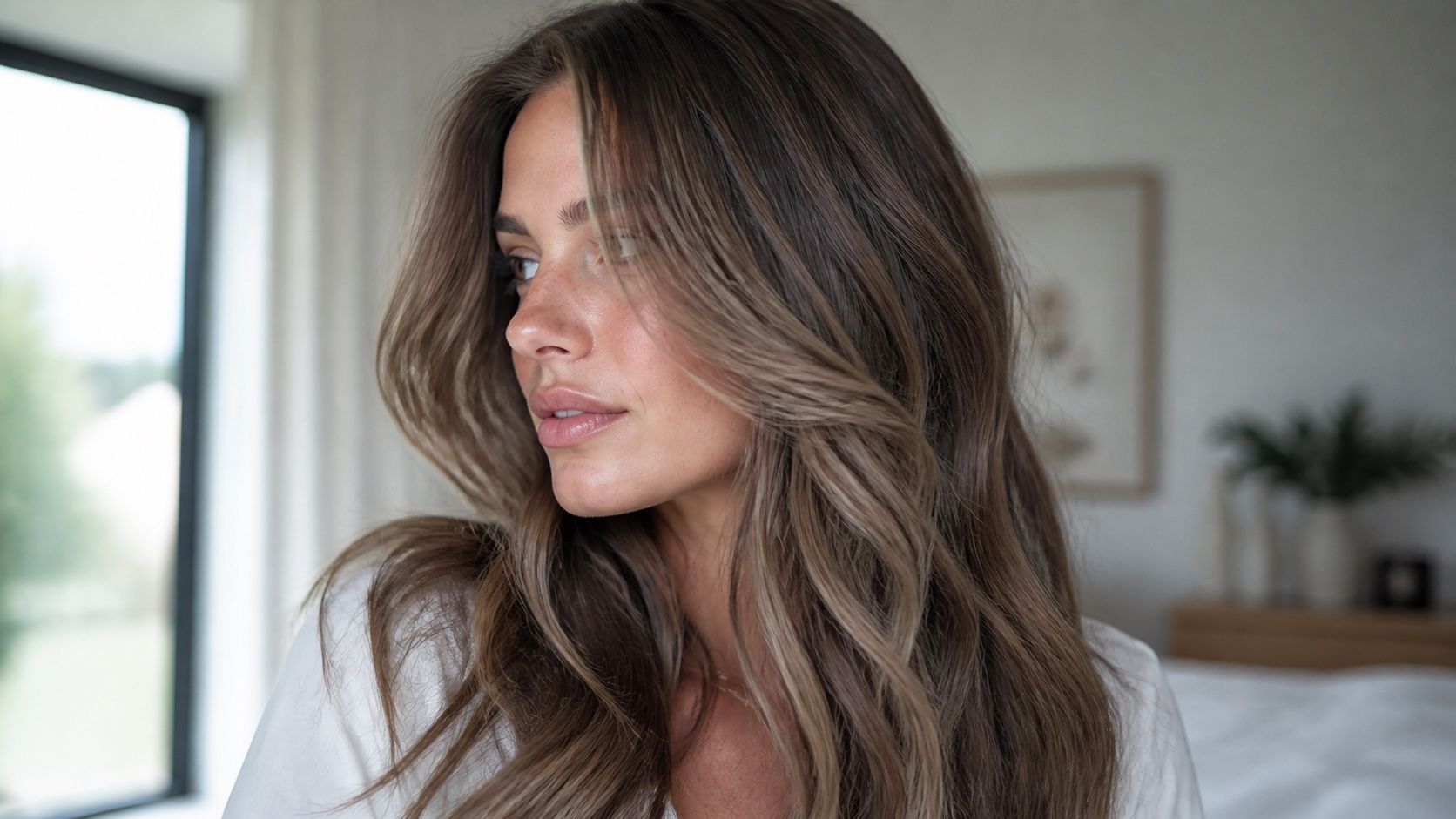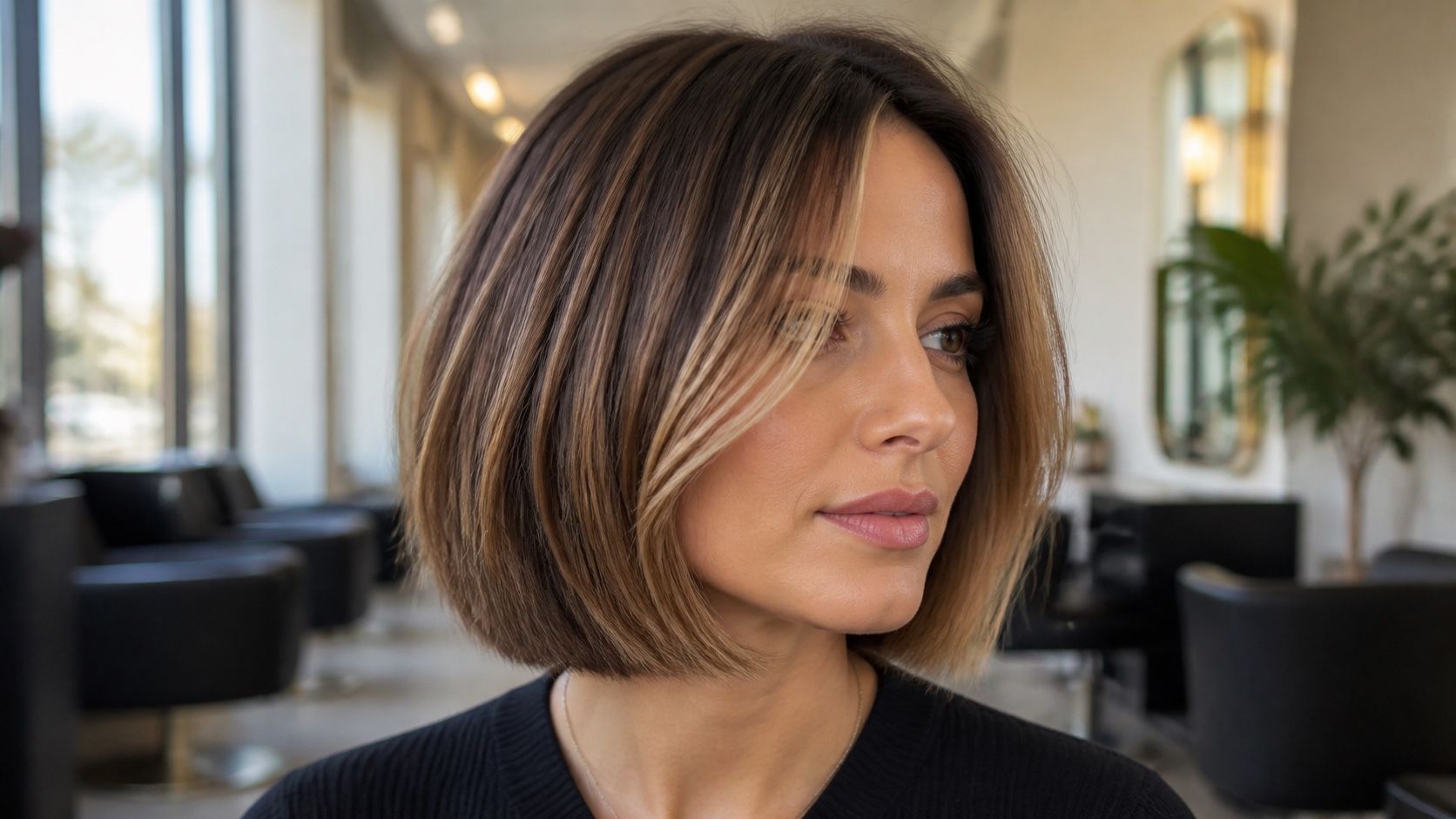
Color analysis for hair works better when the haircut is part of the decision. The same chestnut, beige blonde, or deep espresso can look clean on one shape and heavy on another, because colour sits on lines, layers, bangs, and the pieces nearest the face.
Start with contrast before choosing a shade
People often begin with a colour name. I think that is backwards. First look at contrast: the distance between your natural hair depth, your skin, your brows, and your eye clarity. High contrast faces usually hold stronger edges and deeper shades without looking swallowed. Low contrast faces often look more balanced when the colour changes softly rather than sharply.
Why the haircut changes how colour reads
A blunt cut makes colour look denser. On a sharp bob, a dark shade reads like a clean block, which can be elegant if the face has enough contrast and the ends are healthy. The same block of colour on fine, low-contrast features may look severe by lunchtime, especially when makeup has faded and the hair has lost its morning polish.
Layers break colour apart. Soft layers let highlights and lowlights move, so a shade that might feel too busy on a blunt cut can look natural once the hair separates. Curly or wavy hair does this even more. A ribbon of caramel may look obvious on straight hair and almost blended on textured hair because the curl changes what the eye sees.
Bangs add another complication. They put colour directly over the eyes and brows. A fringe that is much lighter than the natural brow can look playful, or it can look disconnected. A very dark fringe can frame the eyes beautifully, but it can also create a hard cap across the face. Before changing the whole head, look at the front two inches. That is where most people notice a mistake first.
| Haircut detail | How colour usually behaves | Safer first move |
|---|---|---|
| Blunt bob | Shows bands, roots, and strong depth clearly | Keep contrast deliberate and clean |
| Soft layers | Blends highlights and lowlights through movement | Use gentle dimension rather than stripes |
| Bangs | Places shade directly against brows and eyes | Test depth around the fringe first |
| Face frame | Changes the face faster than the back of the hair | Choose a soft lift or shadow, not a harsh band |
High-contrast hair needs a sharper plan
High contrast can look expensive when it is intentional. Deep brunette with a clean cut, glossy black with a strong fringe, or bright blonde against defined brows can all work. The risk is muddiness. If the shade is strong but the haircut is fuzzy, the whole look can feel accidental. The colour asks for a shape that can hold it.
This is where a sharper cut helps. A blunt line, a polished lob, or structured long layers can support darker depth and brighter pieces. Face-framing highlights should still have a plan. If the lightest pieces start too high and too thick, they can turn into a stripe near the cheekbone. If they begin slightly lower, with a root shadow or softer transition, the face gets brightness without the obvious two-panel effect.
Maintenance is part of the contrast too. Dark roots under pale blonde become a graphic choice after a few weeks. That can be fine. It can also become the thing you notice in every mirror. If you like low-maintenance hair, keep the strongest contrast away from the exact root line or choose depth changes that grow out quietly.
Soft contrast works best with movement
Low contrast hair decisions are quieter, but they are not bland. Soft brunette, dark blonde, muted copper, mushroom brown, beige blonde, and gentle lowlights can make the face look calmer when the shade sits close to the person’s natural depth. The danger is going so soft that the hair looks dusty or tired.
Movement solves some of that. Layers, waves, and small shifts in tone give soft contrast something to catch. A flat one-colour dark blonde may look dull on long fine hair. Add a little depth underneath and a restrained brighter piece near the cheek, and the same family starts to look considered. The change is small, but the face reads better.
Do the daylight test before going warmer or cooler. Some soft faces look healthier with a tiny bit of warmth near the front. Others need the orange removed from old highlights before anything looks clean. If your ends are already bleached and dry, a cooler toner might look beautiful for two washes and then slide back to beige. Condition is not glamorous, but it decides whether the colour stays believable.
Face-framing pieces should earn their place
Face-framing pieces are tempting because they change the look without colouring the whole head. They are also easy to overdo. A bright money piece can sharpen the cheekbones on high-contrast features. On softer features it may read like two pale strips, especially when the rest of the hair is several levels darker.
The better question is how much lift the face actually needs. Sometimes one level warmer around the hairline is enough. Sometimes the right answer is a shadowed face frame, where the brightness begins below the root and melts into the front layers. If you wear bangs, the frame has to work with them, not compete against them. A pale streak beside a heavy fringe can pull the eye sideways instead of opening the face.
Ask for the front pieces to be checked when the hair is dry and parted the way you really wear it. Wet placement can lie. Salon sections look tidy under clips, then the hair falls into a side part at home and the bright piece lands in a different place. The most flattering colour is still annoying if it only works on the salon parting.
Make a small practical check before changing the whole head
Before a full colour change, compare three things: your roots, your haircut, and the amount of contrast your face can carry on an ordinary day. Not a party day, not the day with perfect makeup and a fresh blowout. Use the day you tie your hair back, wear a plain T-shirt, and look at yourself under real light.
If the proposed shade needs a different haircut to make sense, decide which change matters more. A blunt bob plus deep brunette is a different commitment from long soft layers plus low-contrast highlights. If the proposed colour needs monthly toning and you know you stretch appointments, build that into the choice. Hair colour is not judged only on the first photograph. It has to survive roots, washing, heat styling, and the way you actually leave the house.
The most useful color analysis hair advice is rarely a single shade name. It is a boundary: keep depth near the roots, soften the face frame, sharpen the cut before going darker, add movement before adding more highlights. Once the boundary is clear, choosing the colour becomes less dramatic and much harder to regret.