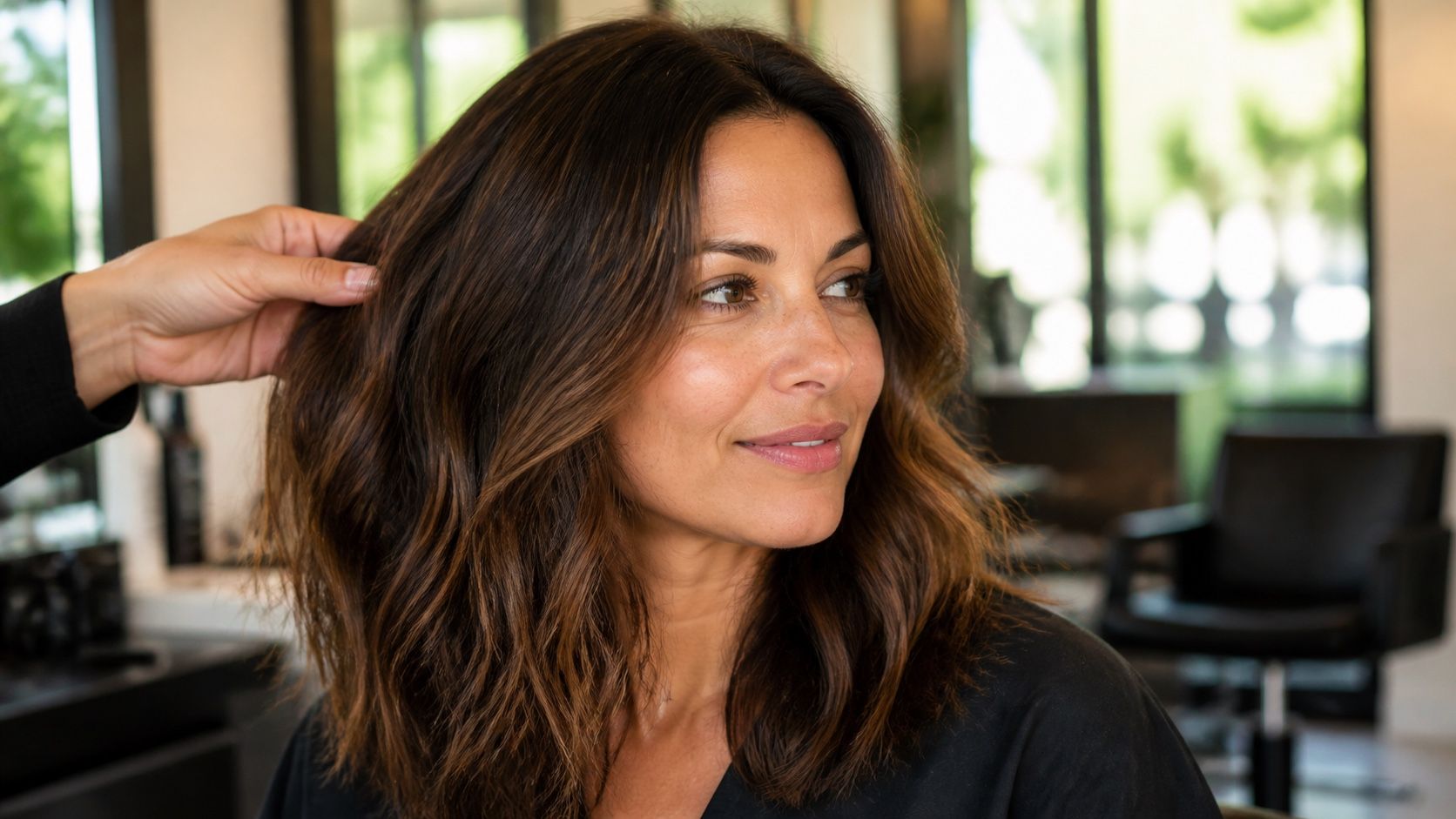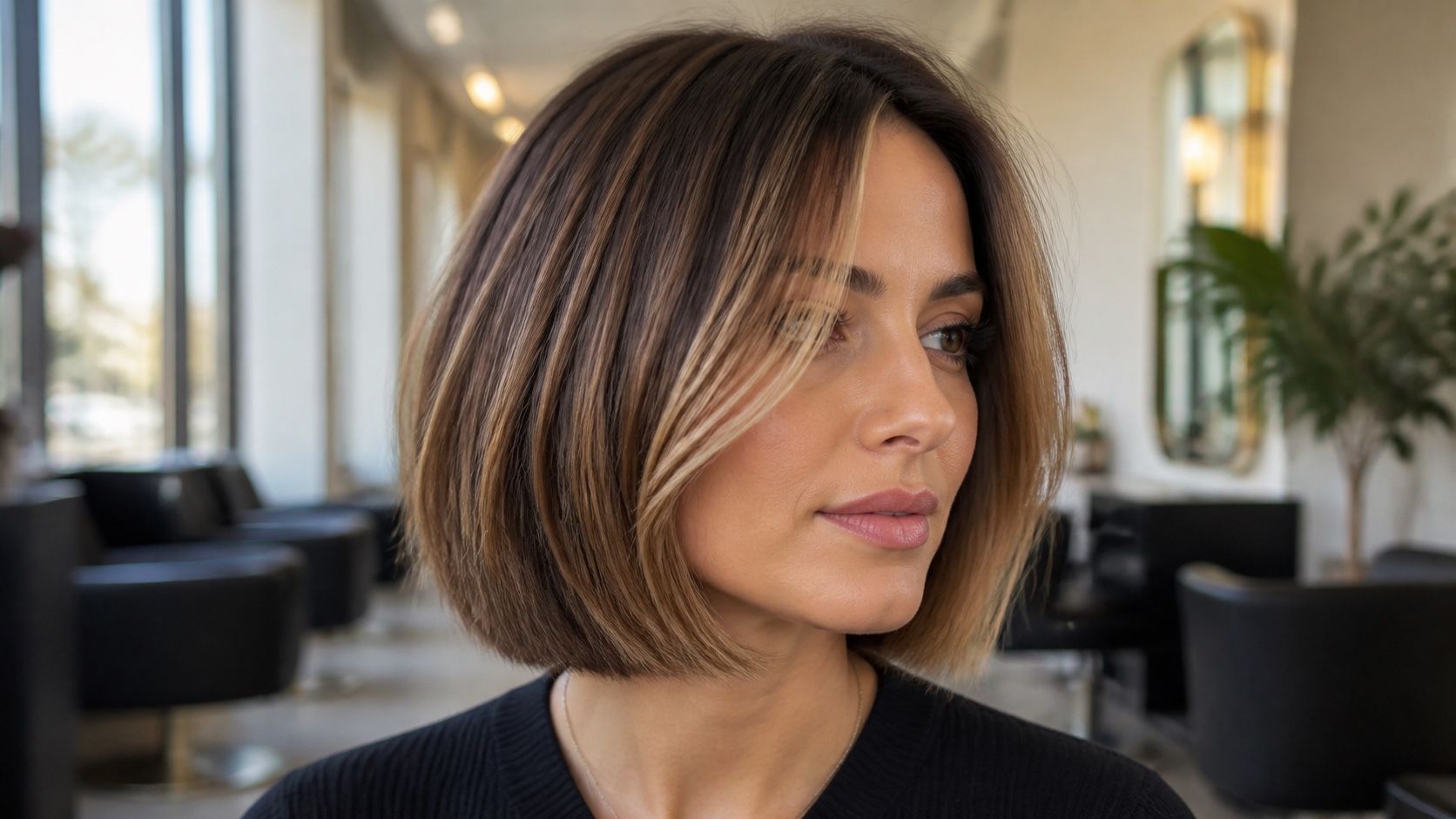
Cool Winter hair looks best when the colour has enough depth and sharpness to hold its own beside bright eyes, clear skin contrast, or naturally dark brows. The hard part is that the best answer is rarely the loudest one. A near-black brown can look cleaner than a blue-black dye, and a small burgundy accent can work better than a full dramatic change.
What makes Cool Winter hair colour look clear
Cool Winter colouring usually reads as crisp rather than muted. That does not mean every person in the palette needs black hair. It means the shade should avoid dusty beige, soft caramel, orange copper, and smoky gold if those tones make the face look tired. The useful check is simple: hold the hair against a true white towel, a charcoal top, and a clear blue or berry fabric. If the shade turns muddy beside those clean colours, it is probably fighting the person wearing it.
Deep brunette, cool espresso, and blue-black are not the same decision
Deep brunette is usually the safest salon conversation because it gives the colourist room to control depth without making the result look like a costume. Cool espresso sits near the same family but feels sharper, especially on straight or softly waved hair where shine is visible. Blue-black is stronger. It can be beautiful, but it also exposes every mismatch: warm foundation, faded ends, red regrowth, or skin that prefers softer contrast.
I would treat blue-black as a commitment rather than a mood. It grows out clearly, it can stain porous ends, and it may make a haircut look harsher if the shape is already blunt. Near-black brown is more forgiving. It keeps the high contrast but still lets the hair look like hair in daylight instead of a solid block of ink.
| Shade direction | Best use | Watch for |
|---|---|---|
| Near-black brown | High contrast with a softer edge | Warm red fade on previously coloured hair |
| Cool espresso | Glossy brunette with a clean reflect | Ends that look matte or overloaded |
| Blue-black | Sharp drama on naturally high-contrast features | Harsh regrowth and a wig-like finish |
| Clear burgundy | Small accent or controlled cool red depth | Purple fade on porous or bleached sections |
When a bright accent can work
A Cool Winter can often carry a bright note near the face, but the accent needs discipline. A clear burgundy ribbon, a cool cherry glaze, or a thin icy face frame can wake up a dark base. Too many mixed tones do the opposite. Violet, blue, red, and silver all competing in one head of hair can start to look like a test board, not a style.
The safest place to try brightness is usually a small panel under the top layer, a money piece that can be toned back, or a gloss that fades before it becomes a maintenance trap. Full-head bleaching for a bright winter effect is a bigger risk, especially on naturally dark hair. The hair has to lift cleanly, the toner has to stay cool, and the condition has to survive. That is a professional colour correction conversation, not a weekend experiment.
How the haircut supports high contrast
High-contrast colour changes the way a cut behaves. A blunt bob in cool espresso can look precise and expensive because the outline is doing the work. The same shade on very long, dry, uneven ends can look severe. Short layers can soften a dark colour, but too much broken texture may scatter the shine that makes a Cool Winter shade look clean.
Face-framing pieces deserve special attention. If the hairline is dark and the skin is fair, a thick pale stripe can create a hard stop across the cheek. A slimmer piece, placed slightly behind the front hairline, often looks more wearable. With bangs, the question is different: the colour sits right above the eyes, so warmth or dullness shows quickly. A cool toner on fringe pieces may matter more than the colour hidden at the back.
Regrowth and maintenance decide whether the shade stays elegant
A fresh Cool Winter colour can look almost too easy on salon day. Four weeks later, the truth appears at the parting. If natural roots are medium brown, near-black brown grows out with a visible but manageable shadow. If the natural base is light brown or dark blonde, blue-black regrowth can look blunt very quickly. That does not make it wrong; it just means the calendar has to be honest.
Gloss and tone are part of the plan. Cool dark shades can fade red, violet, or green depending on the previous colour under them. Clarifying shampoo, hard water, heat styling, and sun exposure all change the reflect. A person who swims often or washes daily may be happier with a deep brunette gloss than a more fragile blue-black finish. The maintenance should match the life around the hair, not the best photo in a saved folder.
A practical way to test before changing the whole head
Before committing, compare three swatches against the face in daylight: one near-black brown, one cool espresso, and one stronger blue-black or burgundy option. Look at the whites of the eyes, the jawline, and the colour of the lips without heavy makeup. If the shade makes the face look sharper but still rested, it is promising. If it makes every bit of redness or shadow stand out, the contrast may be too hard.
For salon notes, avoid vague requests like dark but cool. Bring the natural root level, the current coloured history, and the maintenance limit into the same sentence. A useful note might be: deep brunette, cool reflect, no orange warmth, softer than blue-black, with a gloss plan for fade. That gives a colourist something usable. Cool Winter is a direction, not a prison, and the best result usually comes from choosing the sharpest shade the hair can carry gracefully.
Deep colour also changes the way texture is read. On straight hair, a blue-black or cool espresso surface can look graphic and polished; on waves and curls, the same depth breaks into small areas of shine and shadow. That movement can make the result feel softer than the label suggests. Ask whether the haircut will be worn with a clean perimeter, a loose wave, or a textured finish, because each version reveals a different amount of contrast. Plan the first weeks as carefully as the first appointment: roots may show quickly at the part, fading can expose warmth, and a strong shade can make dry ends look more visible. A small trim, realistic washing routine, and an agreement about how much contrast should remain at the next visit keep the colour intentional without making every refresh a crisis.