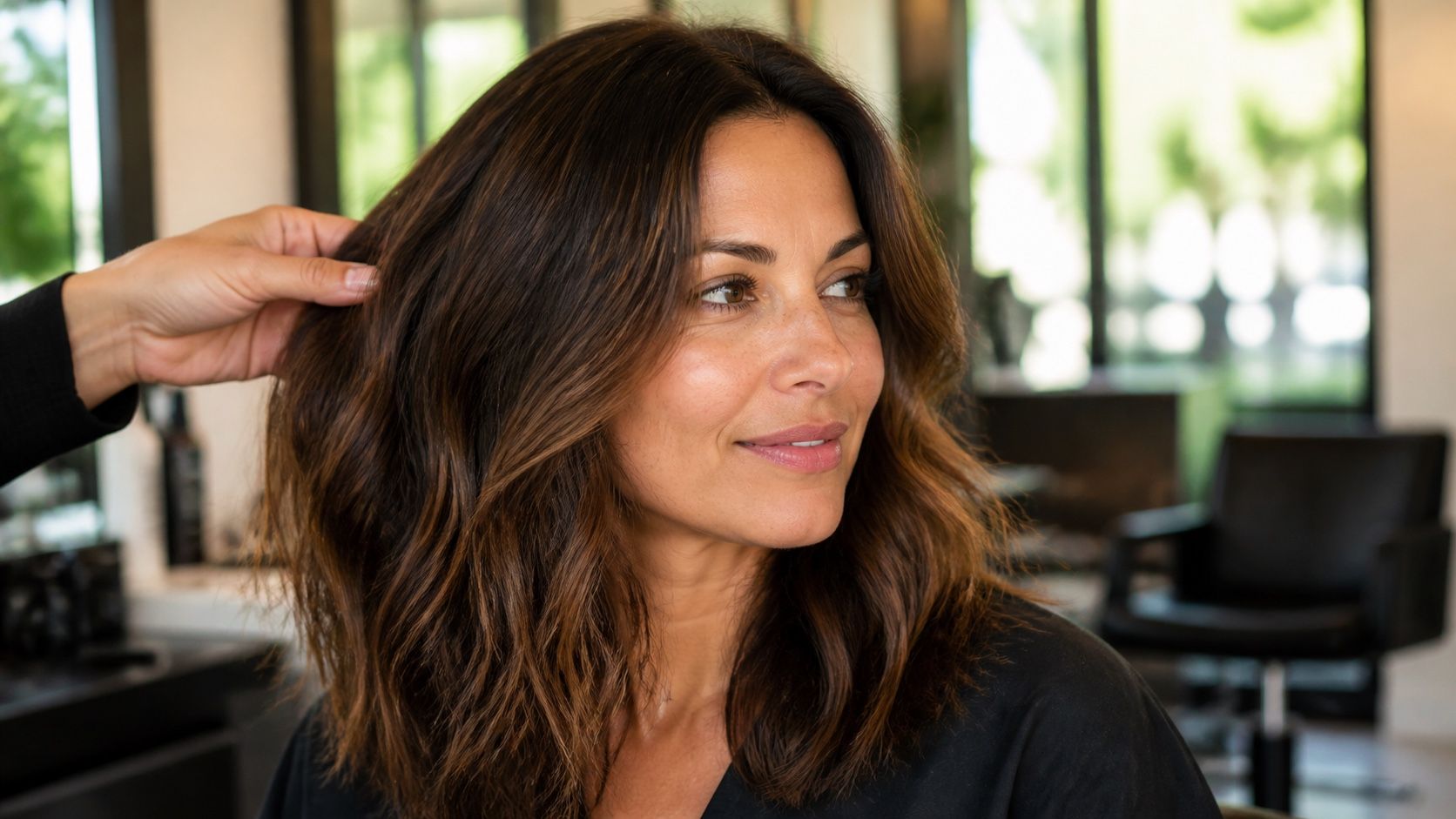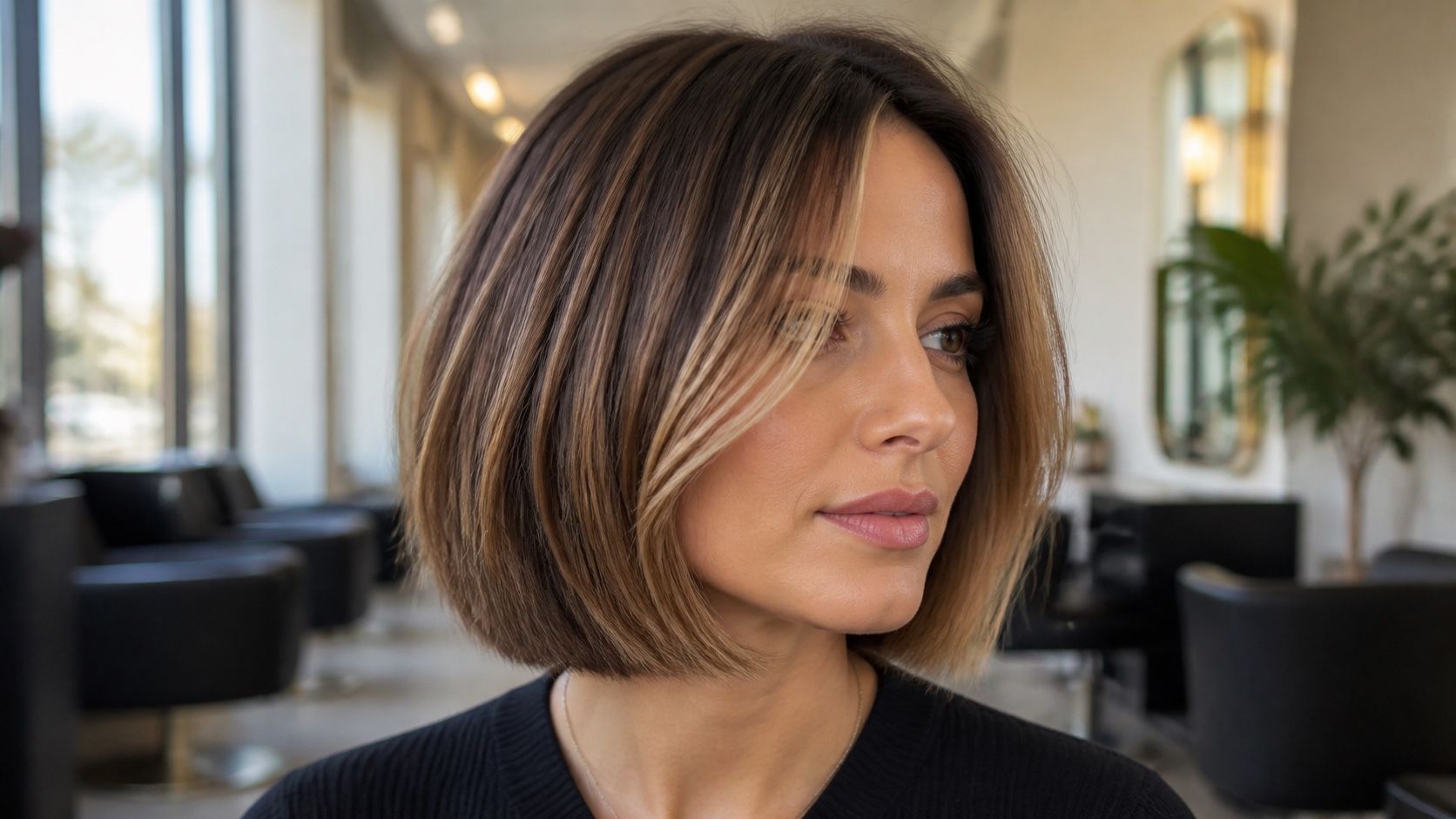
Hair colour analysis sounds more scientific than it usually feels in real life. Most people are not trying to become colour theorists. They are standing between two screenshots, wondering why one brunette looks soft and the other looks severe, or why the blonde they loved in the salon has turned oddly yellow at home. The practical job is to read direction first, then choose a shade name second.
Start with direction rather than a named colour
A named colour is often too vague to be useful. Chocolate brown, honey blonde, auburn, mushroom brown, and beige blonde can each mean several different things depending on depth, reflect, and lighting. Hair colour analysis starts by asking a less glamorous question: is the shade moving warmer, cooler, or more neutral than the natural base? Once that direction is clear, the label becomes easier to control.
Signs that a shade is too warm or too cool
A shade that is too warm often announces itself quickly. The face may look flushed, the whites of the eyes can seem less clear, or the colour may pull attention away from the haircut. Copper and golden reflect are not the enemy. They can look expensive and alive when they echo the skin and eyes. The problem is volume. A small golden glow is different from a brassy orange band through the mid-lengths.
A shade that is too cool can be quieter, which makes it easier to miss. Ashy reflect can clean up unwanted warmth, but too much ash may make the hair look dusty or heavy. Mushroom brown is a good example. On the right base it looks soft and modern. On hair that needs warmth, it can look like the colour has been drained out. If the skin suddenly needs more makeup to look awake, the direction may be too cold or too flat.
Check the colour in two types of light before judging it. Salon lighting often flatters shine and exaggerates cool tones. Bathroom lighting can make beige look yellow and ash look greenish. Daylight near a window is usually the most honest. Pull the hair back, then let it fall around the face. The first view checks the skin. The second checks whether the colour and haircut are working together.
How natural depth affects the choice
Natural depth decides how dramatic the change will feel, even when the colour family is sensible. A level four brunette moving to soft copper is making a bigger visual move than a level seven dark blonde adding golden reflect. Dark hair also carries underlying warmth, so lifting it lighter often exposes red, orange, or yellow stages. That does not mean blonding is impossible. It means toning and maintenance should be part of the decision from the start.
Blonde shades need the same discipline. A warm undertone does not automatically mean bright yellow blonde, and a cool undertone does not automatically mean silver. Beige, pearl, wheat, champagne, and sandy blonde can sit in different places on the warm-cool scale. The natural base tells you how much work it takes to get there and how quickly the result may shift after washing.
Brunette shades can be just as tricky because the changes look subtle on paper. Soft espresso, neutral brown, chestnut, and mushroom brown may all sit near each other in a swatch book, yet they read very differently beside the face. Red tones are even less forgiving. A little copper can make green or hazel eyes look clearer. Too much copper on the wrong base can dominate everything else. Natural depth is the anchor that keeps those choices realistic.
Where neutral shades help
Neutral shades are useful when warm and cool both seem slightly wrong. They are also helpful when the haircut, grey blending, or grow-out matters more than making a dramatic colour statement. A neutral brunette can soften old warmth without looking smoky. A neutral blonde can feel cleaner than gold but less severe than ash. For many people, neutral is not a compromise. It is the direction that lets the face stay visible.
| Situation | Neutral option to consider | Why it can work |
|---|---|---|
| Warmth turns brassy fast | Beige brown or beige blonde | It softens yellow or orange without pushing the hair fully ash. |
| Cool shades look flat | Soft neutral brunette | It gives shape back to the face while keeping red tones controlled. |
| Grey is growing in | Neutral lowlights or blended toning | It can reduce a hard root line without hiding every silver strand. |
| Red tones feel too loud | Muted copper or brown-copper | It keeps warmth but lowers the volume around the face. |
The mistake is treating neutral as maintenance-free. Beige can still fade warm. Neutral brunette can still build up too dark if permanent colour is layered over the ends. Grey blending still needs a plan for toning and trimming. Neutral works best when it is chosen for a specific reason, such as softening brass, easing root grow-out, or keeping contrast gentle.
Questions to ask before colouring
Before colouring, ask what your hair has already been through. Previous permanent dye, bleach, toner, gloss, sun, swimming, and heat styling can all affect the result. A photo may show a clean cool brown, but your ends may have old warmth that pushes through. Another photo may show creamy blonde, while your natural depth requires several sessions to reach it safely. This is where honest history beats optimism.
Ask how the colour will look after four weeks as well as on day one. Warm reflects may brighten. Cool reflects may fade or dull. Red tones can lose their polished edge quickly. Grey blending may look better as it settles, or it may need a toner to keep the blend calm. If a stylist explains the fade pattern clearly, listen. That is often more useful than hearing that the shade is beautiful.
It also helps to ask which part of the look is doing the most work. Is it the depth, the reflect, the face framing, the root shadow, or the finish? If the important part is the soft line around the face, you may not need a full colour change. If the important part is the cool reflect, you may need toning rather than more highlights. Smaller decisions often look better because they solve the actual problem.
Turn the analysis into a salon-ready note
A salon-ready note should be plain enough to read back without embarrassment. Use this structure: current natural depth, existing colour history, direction you want, direction you want to avoid, and maintenance you can accept. For example, medium brunette with old warm ends, softer neutral brown, no strong red, root grow-out needs to stay quiet. That gives the colourist something real to work with.
Keep reference photos, but give each one a job. One can show depth, one can show reflect, and one can show placement. Do not expect a single image to carry the whole note. Lighting, filters, extensions, and a professional blow-dry can make a colour look easier than it is. The best use of hair colour analysis is not to chase a perfect label. It is to make the next choice specific enough that the result has a fair chance of looking intentional on your own hair.